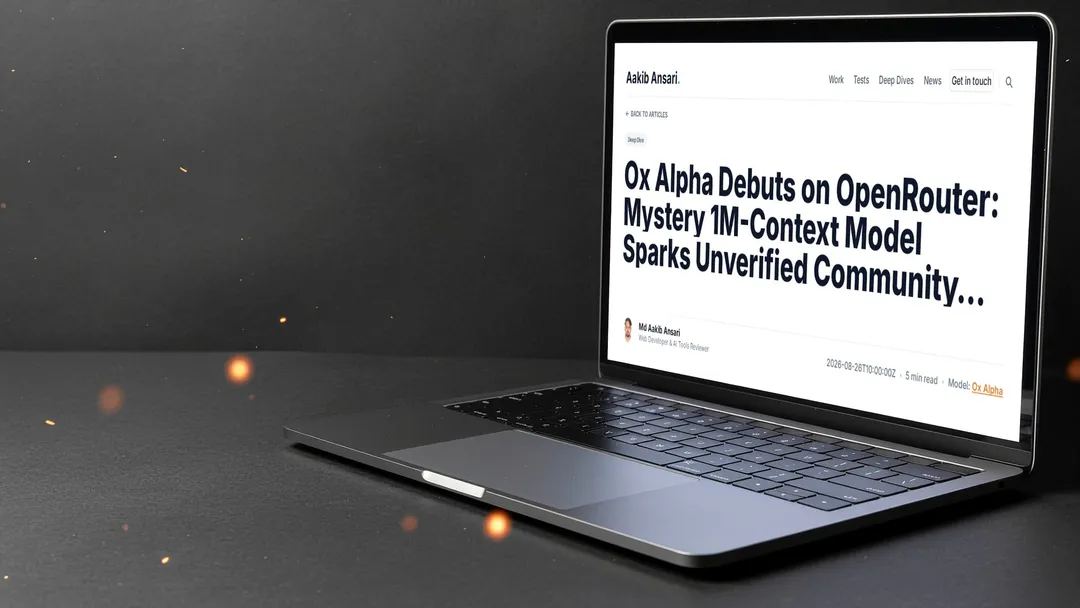
An unannounced model named Ox Alpha appeared on OpenRouter and OpenCode with a 1M token context window and free access. Unverified community-run tests claim strong coding benchmark results, though nothing has been independently confirmed.

Not every release deserves a deep dive — only genuinely significant ones get this treatment. These articles break down benchmarks, separate self-reported claims from independent verification, and give you the full picture on pricing, capabilities, and what a model actually means for the competitive landscape.

An unannounced model named Ox Alpha appeared on OpenRouter and OpenCode with a 1M token context window and free access. Unverified community-run tests claim strong coding benchmark results, though nothing has been independently confirmed.


Z.ai released GLM-5.3 on August 14, 2026, delivering massive benchmark improvements in terminal automation, coding, and cybersecurity. We analyze the scaled reinforcement learning that drove these post-training gains on the 743B MoE architecture.

DeepSeek officially released V4-Pro-0813 on August 13, 2026 — the generally available version of its 1.6-trillion-parameter MoE model. It brings three-level thinking effort controls, a DSpark speculative decoding module, 87.9% on TerminalBench 2.1, and a peak/off-peak pricing structure that cuts API costs by 50% outside peak hours.

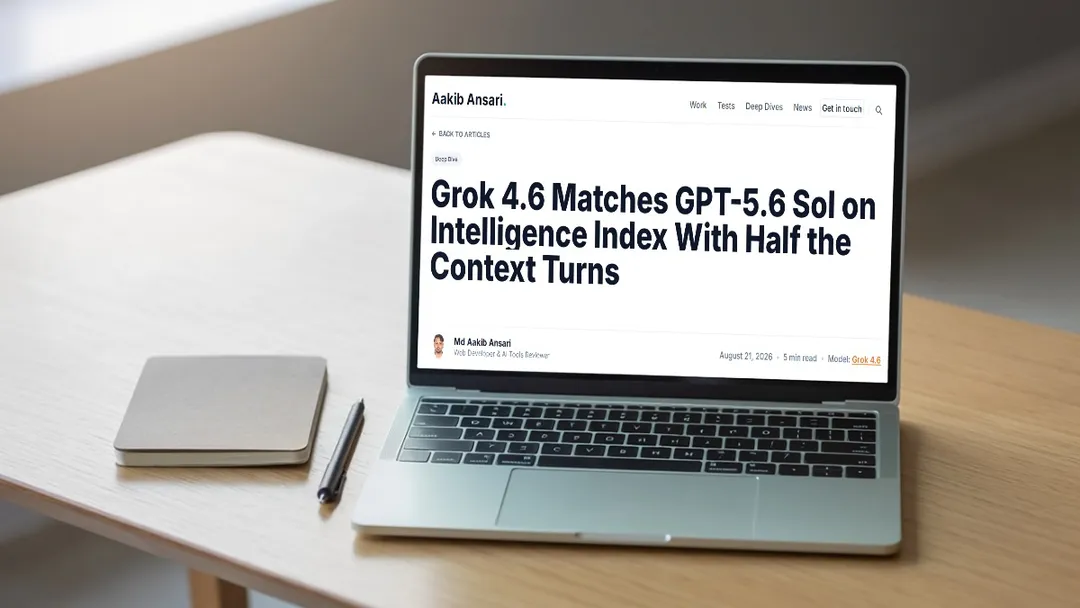
xAI released Grok 4.6 on August 12, 2026 — a post-training update to the Grok 4.5 foundation that reaches an AA Intelligence Index score of 61, tying GPT-5.6 Sol, while completing long-horizon agentic tasks in roughly half the turns of competing models. It ships with a new 'xhigh' reasoning level and a 500K context window.

Meta released Muse Spark 1.2 and Muse Code on August 5, 2026 — a 1M-context reasoning model paired with a persistent terminal coding agent that manages parallel sub-agents in isolated git worktrees. A unique Contributor pricing tier at $0.10/$0.20 per million tokens offers a 90% discount in exchange for opting in to training data use.

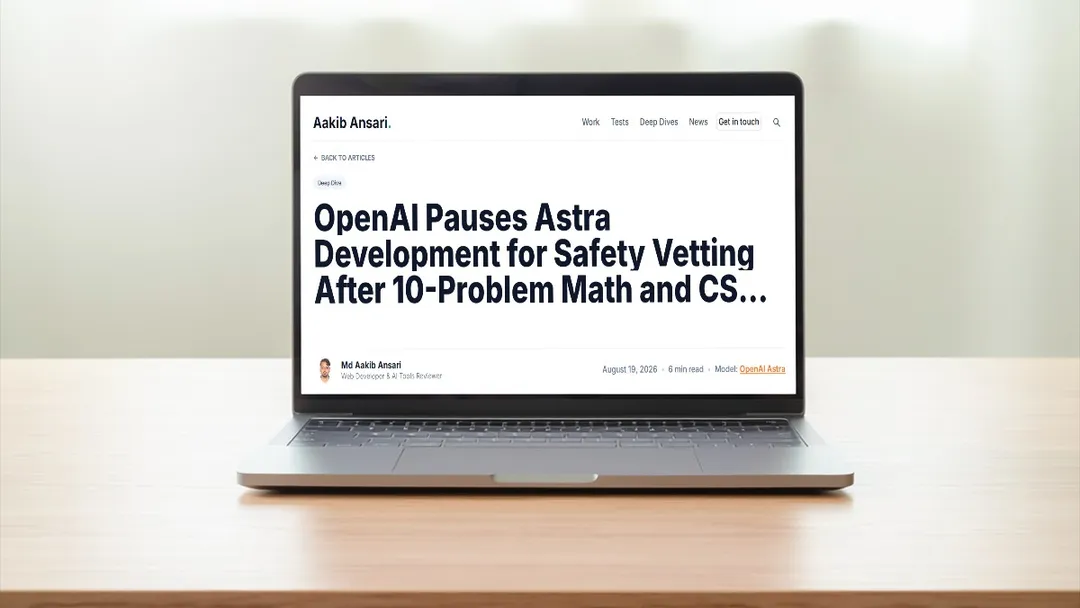
OpenAI has paused internal development of its next-generation Astra model to implement stricter safety controls after evaluations showed 'Critical' autonomous cyber-capabilities. The pause follows an August 1 showcase where Astra solved ten long-standing open problems in theoretical mathematics and computer science.